House Construction in Tyumen: Practical Guide for Owners and Builders
Introduction
Building a house in Tyumen and the surrounding Tyumen Oblast requires planning that accounts for the continental climate, local soil and groundwater conditions, municipal rules, and the region’s infrastructure (gas, electricity, water). This guide outlines the main steps, technical considerations, material choices, regulatory requirements, and practical tips to help you manage a successful project.
Key local conditions to consider
— Climate: long, cold winters and relatively short warm summers — robust thermal insulation and reliable heating systems are essential.
— Frost and frost heave: foundation depth must be designed to withstand the regional frost penetration; a geotechnical survey is indispensable.
— Groundwater and soils: in parts of the oblast groundwater may be high and soils variable (sands, clays); foundation type will depend on the survey.
— Utilities: gas distribution is common in Tyumen city and many nearby settlements, but outside urban limits you may need alternative heating and water solutions.
Steps to build a house in Tyumen
1. Preliminary planning
— Define budget, desired area and layout, and preferred building technology (brick, aerated concrete, timber, SIP panels, monolithic).
— Verify land status: ownership, cadastral number (кадастровый номер), zoning restrictions and permitted use.
2. Site survey and geotechnical investigation
— Order a soil survey (геология/изыскания) to determine bearing capacity, frost depth, groundwater level and recommended foundation type.
— Surveyor to check boundaries and set benchmarks.
3. Design and engineering
— Architectural project (проект дома) and structural calculations by certified professionals.
— Include plans for foundation, roof, thermal envelope, plumbing, electrical and heating systems.
4. Permits and approvals
— Obtain required municipal approvals and building permits (разрешение на строительство) — contact the local administration for the exact list and submission process.
— Compliance with Russian building codes (SP) and GOST standards is mandatory; ensure designers reference current norms.
5. Contractor selection and contracting
— Collect several bids, check references and past projects, verify licenses and insurance.
— Sign a clear contract with scope, milestones, payment schedule, and warranties.
6. Construction phase
— Site preparation and earthworks.
— Foundation installation (strip, slab, piles, or combined solutions depending on geotech).
— Structure erection, enclosure (walls, roof), windows and doors.
— Utilities: gas/electric/water/sewage connections or installation of local systems (septic, wells).
— Interior finishing, commissioning of heating and ventilation systems.
7. Inspections and handover
— Schedule municipal inspections where required.
— Obtain completion certificates and register the property if needed.
Foundation and structural advice
— Get a geotechnical report; do not rely on general assumptions about soil in the region.
— Common foundations:
— Pile foundations: used where bearing soils are deep or groundwater is high.
— Strip or shallow foundations: possible when competent soil is near the surface and frost heave is addressed.
— Monolithic reinforced concrete slabs: can be effective for even load distribution and reduced movement.
— Ensure foundation depth or thermal insulation below slab prevents frost damage; use perimeter insulation and drainage to mitigate frost heave and moisture.
Thermal performance and heating
— Insulation priorities: foundation insulation, high-quality wall insulation, roof/attic insulation, and airtightness.
— Windows: double- or triple-glazed units with warm-edge spacers and proper installation to reduce heat loss.
— Heating systems: if gas is available, a modern condensing gas boiler or gas-fired heating is common. Alternatives: pellet/solid-fuel boilers, electric boilers with thermal storage, or heat pumps (consider reduced efficiency at very low winter temperatures — hybrid systems are advisable).
— Ventilation: install controlled mechanical ventilation with heat recovery (MVHR) to maintain indoor air quality without excessive heat losses.
Materials: pros and cons for Tyumen
— Brick: durable, fire-resistant, good mass for thermal comfort but expensive and requires thorough insulation details.
— Aerated concrete (gasobeton): popular in Russia — good thermal performance, easier to work with, but needs quality finishing to protect from moisture.
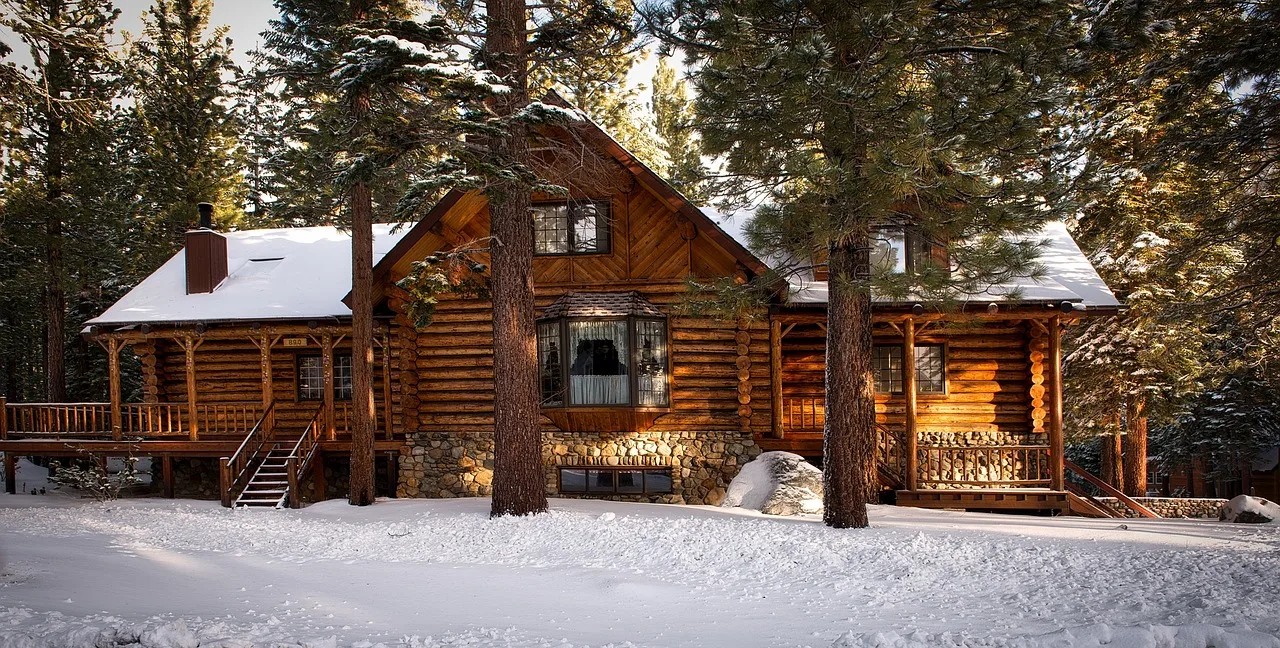
— Timber and log houses: fast erection and good insulation when constructed correctly; requires moisture control and maintenance.
— SIP panels / prefabricated systems: fast construction and good thermal performance when airtightness and moisture protection are well-executed.
Choice depends on cost, timeline, local contractor experience, and personal preference.
Water, sewage and utilities
— Water: connection to municipal supply if available; otherwise consider drilled wells and filtration.
— Sewage: municipal sewer connection where present; otherwise septic tanks or compact treatment plants (choose frost-resistant designs and bury below frost line or insulate sufficiently).
— Gas: application to the regional gas company is required; gas installation must be performed by certified specialists and inspected.
— Electricity: confirm capacity and service connection terms with the local grid company; consider backup generators for outages.
Construction seasons and winter work
— Summer is the main construction season, but many tasks (foundation piling, structure assembly) can be done year-round.
— Concrete works in winter require heating, antifreeze additives or insulated formwork to ensure proper curing.
— Frozen ground can simplify earthworks and piling but complicates others (e.g., landscaping).
Budgeting and timelines
— Timeline: typical single-family house often takes 6–18 months depending on size, complexity and